
Criminal Court Records in Lemhi County
A criminal court record is the court's case file, not just a police report, arrest record, or jail entry. In Lemhi County, the District Court Clerk maintains records generated and filed with the District and Magistrate Courts. Criminal case files can include the complaint or information, probable-cause material where public, warrants or summonses, bond orders, arraignment entries, plea forms, motions, hearing minutes, verdicts, disposition, sentencing orders, fines, probation conditions, and appeal notices.
Idaho's Magistrate Division handles misdemeanor arraignments, misdemeanor trials and sentencing, initial felony appearances, bail, warrants, and felony preliminary hearings. District Court handles felony trial and sentencing after bindover or filing of an information. Lemhi County is part of the Seventh Judicial District, and local case information starts online through Idaho iCourt while copy requests route to the Lemhi County District Court Clerk.
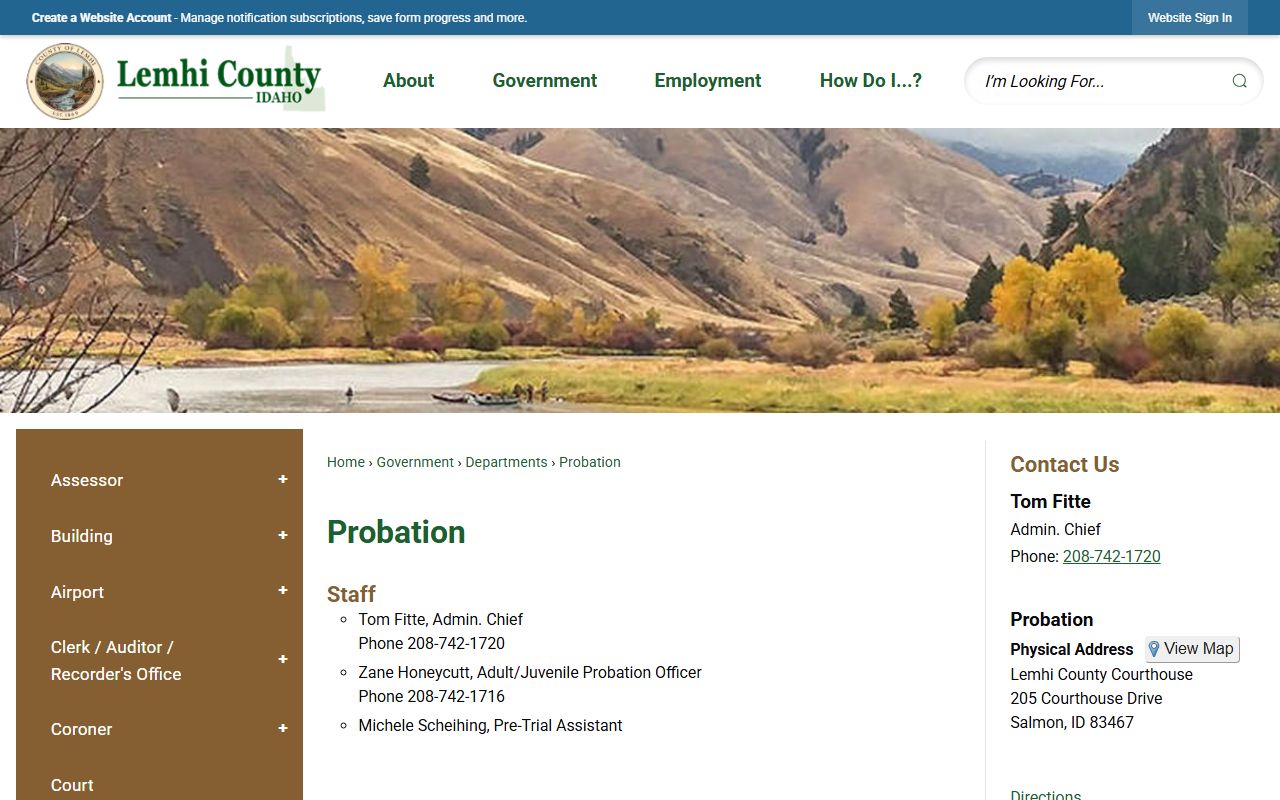
The manifest image from Lemhi County Probation anchors this page in a local criminal-case office that can appear after sentencing.
How to Search Lemhi County Criminal Court Records
The main search channel is Idaho iCourt, including the public portal at portal-idaho.tylertech.cloud/odysseyportal. Search by case number when possible. If only a name is known, use last name and first name, then narrow by location, case type, case status, date range, or judicial officer when the portal offers those filters.
- Open iCourt Smart Search and enter the case number or defendant name.
- Use the Last, First Middle format for names and wildcard rules only when needed.
- Confirm that the result belongs to Lemhi County and the correct court level.
- Read the docket for charging, hearing, plea, disposition, sentencing, bond, and probation entries.
- Use arrest records and court charge records when the question is limited to the charge list after arrest.
- Request copies or certified records from the District Court Clerk when the portal does not provide the actual document.
The Lemhi County Court page lists court contact information, while the county Sheriff's Office page covers law-enforcement and jail functions. Those offices overlap in criminal matters but do not hold the same records. Jail custody status belongs with the sheriff or VINE; filed case records belong with iCourt and the clerk.
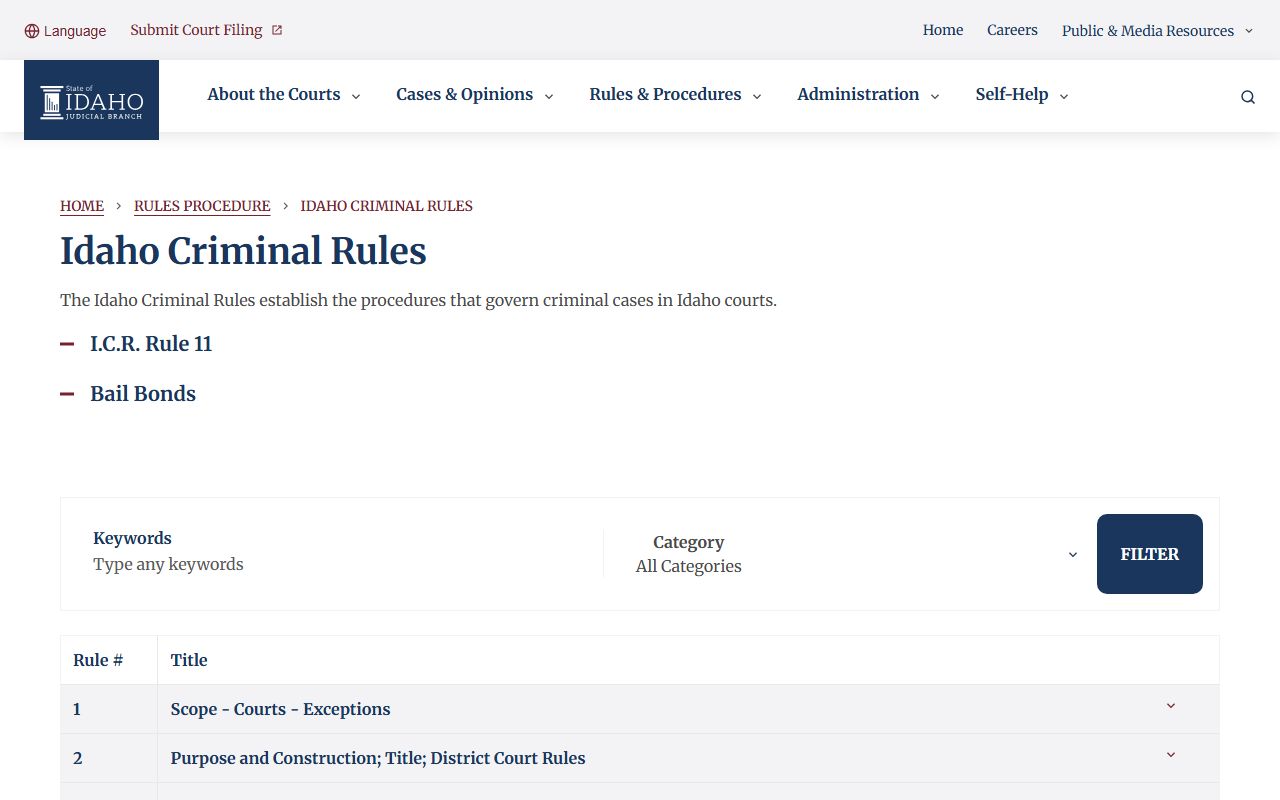
The manifest image from Idaho Criminal Rules shows the statewide criminal procedure rules that frame these case stages.
Stages of a Lemhi County Criminal Case
Criminal records change as a case moves from arrest or citation into formal court action. The sheriff or police may make the arrest, the Lemhi County Prosecutor decides what to file, the court opens the case, and the District Court Clerk maintains the resulting record. Felony matters often begin in the Magistrate Division for initial appearance and preliminary hearing, then move to District Court if bound over or otherwise charged for felony proceedings.
Case flow: Arrest or citation › Prosecutor review › Complaint or information filed › Initial appearance › Arraignment › Motions and hearings › Plea or trial › Disposition › Sentencing › Probation, payment, appeal, or post-judgment review.
| Stage | What Happens |
|---|---|
| Initial appearance | The defendant is advised of rights, bond or release conditions may be addressed, and future hearings are set. |
| Arraignment | The charge is stated in court and a plea is entered or scheduled depending on the case type. |
| Preliminary hearing | In felony matters, a magistrate may decide whether probable cause supports moving the case forward. |
| Pretrial / motions | Parties file motions, notices, discovery-related documents, and hearing requests that appear as docket events. |
| Plea or trial | The case resolves by plea, dismissal, amendment, acquittal, or trial verdict. |
| Sentencing | The court enters penalties, jail or prison terms if applicable, fines, fees, restitution, probation, and conditions. |
What a Lemhi County Criminal Court Record Shows
Public criminal court records may include both summary fields and docketed events. A record can show a charge that was later dismissed, reduced, amended, or resolved by plea. It can also show payments, bond, restitution, probation review, or appeal activity. Online access may omit sealed material, juvenile information, victim-sensitive information, personal identifiers, or documents withheld by court rule.
| Field | What It Shows |
|---|---|
| Case Number | Idaho criminal case identifier used in iCourt and clerk requests. |
| Defendant | The person accused in the criminal case, subject to redaction rules for protected information. |
| Charges | Filed counts, statute references, severity, amendments, dismissed counts, or reduced counts when public. |
| Court Level | Magistrate Division for misdemeanors and initial felony work, or District Court for felony trial and sentencing. |
| Hearings | Initial appearance, arraignment, preliminary hearing, motion hearing, trial, sentencing, or review dates. |
| Plea | Guilty, not guilty, or other plea activity reflected in the docket or documents. |
| Disposition | Conviction, dismissal, acquittal, amended resolution, or other outcome. |
| Sentence | Jail, prison, probation, fines, fees, restitution, conditions, or payment obligations. |
| Appeal | Notice of appeal or transfer to a higher Idaho court when filed. |
Charges vs. Convictions
A charge is an accusation filed in court. A conviction is a final outcome based on a guilty plea, verdict, or other qualifying disposition. Lemhi County criminal court records can show charges that never became convictions because they were dismissed, amended, reduced, or resolved in a way that did not create a conviction. This distinction is especially important when comparing charges after arrest with the final criminal case record.
| Charge | Conviction | |
|---|---|---|
| Stage | Filed accusation or count. | Final adjudication after plea, verdict, or qualifying disposition. |
| Proof level | Can be based on probable cause or charging decision. | Requires a legal finding or plea supporting guilt. |
| Record meaning | May be pending, amended, reduced, or dismissed. | Shows the resolved offense and related sentence or penalty. |
| Where to verify | iCourt docket, charging document, prosecutor filings. | Disposition, judgment, sentencing order, and clerk copy. |
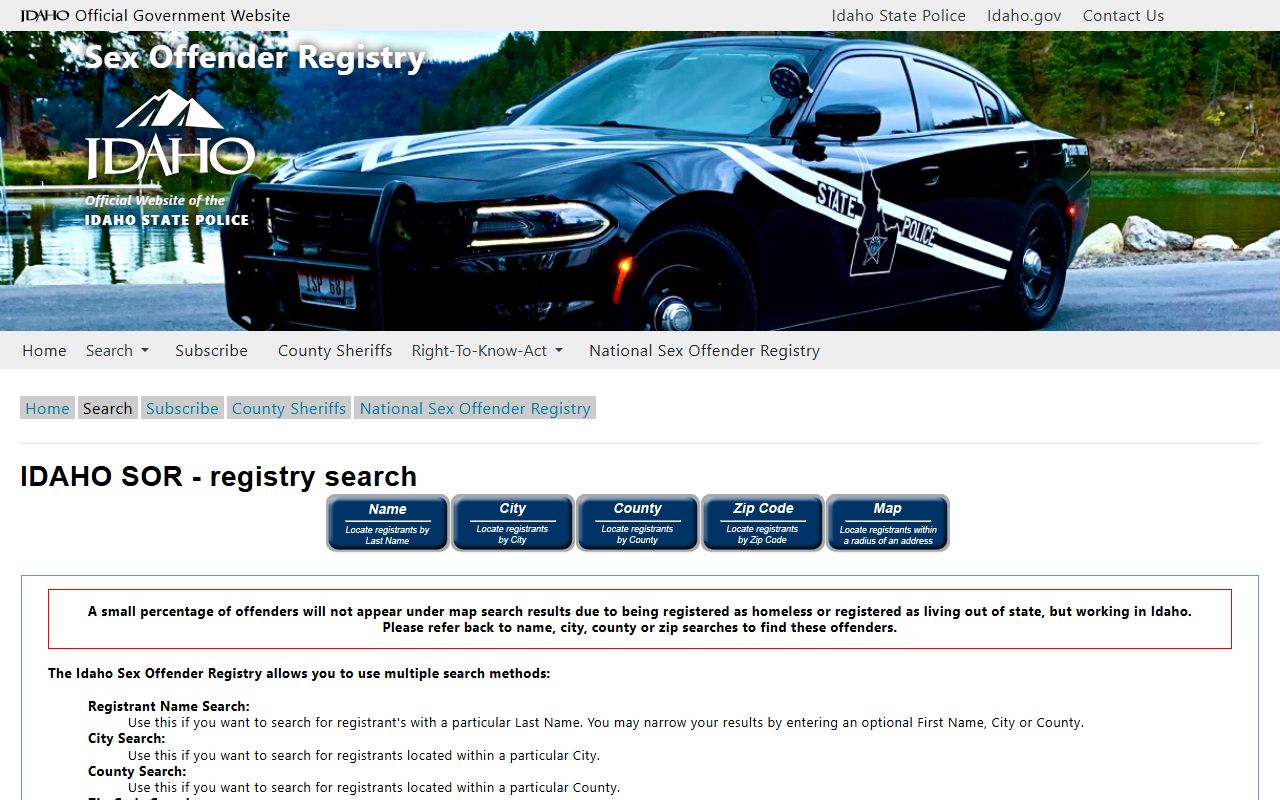
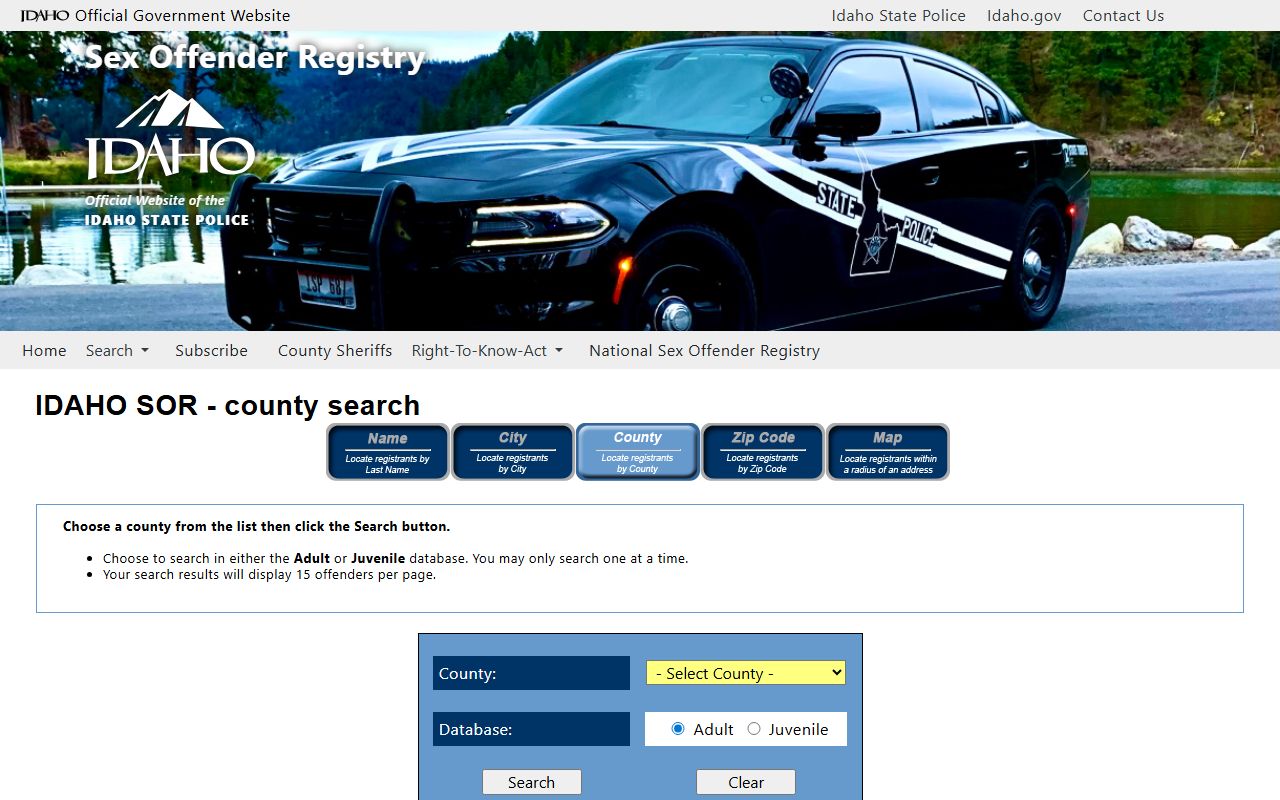
The manifest image from the Idaho State Police sex offender registry search landing page shows a separate statewide public safety database that should not be confused with ordinary criminal case search.
Reading Dispositions and Sentences
Disposition entries tell how a charge or case resolved. Common outcomes include guilty, not guilty, dismissed, amended, reduced, acquitted, sentenced, judgment entered, or appeal filed. A docket may show one outcome for each charge, so one case can contain a conviction on one count and dismissal on another. Sentencing entries may include incarceration, suspended time, probation, fines, fees, restitution, court costs, payment plans, or review hearings.
Local payment context matters. The District Court Clerk page says the Magistrate Court can receive check, money order, cash, Visa, and MasterCard. Lemhi County also publishes online payment convenience-fee information for county payments, while iCourt payment materials allow lookup by citation number, case number, party name, business name, or driver's license when the license number was entered on the case. Payment information is not the same as a complete criminal history.
Prosecutor and Public Defender Records
The Lemhi County Prosecutor is the local charging office. Official county sources list Chase Slavin as County Prosecutor and Rocky Wixom as Deputy Prosecutor at 200 Fulton Street, Suite 104, Salmon, ID 83467, phone (208) 742-1276, fax (208) 742-1277. The prosecutor decides what charges to file after an arrest or citation, but filed complaints, informations, orders, and dispositions are court records once entered in the court file.
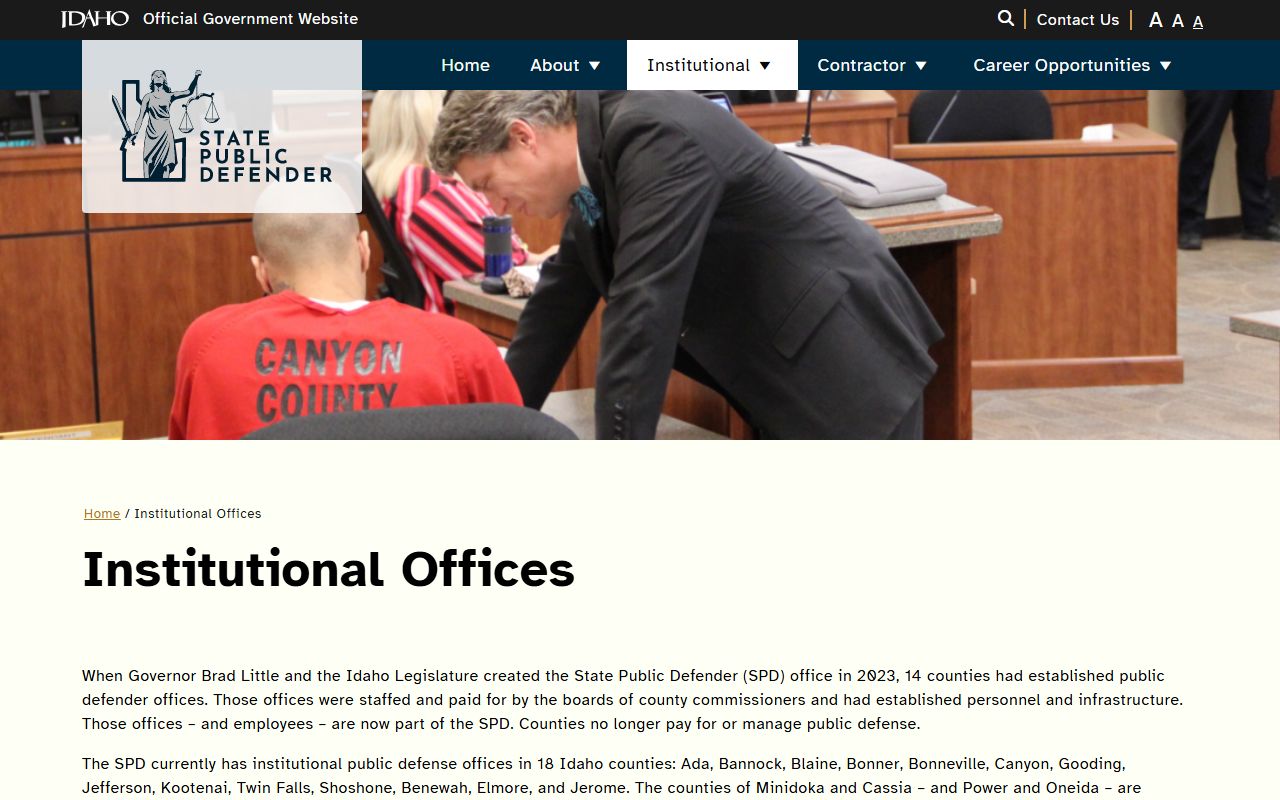
Idaho has a State Public Defender system. The State Public Defender page says the office has contractual arrangements with public defenders in Lemhi and other Seventh Judicial District counties. The institutional offices page identifies District Public Defender Jordan Crane as manager for the 7th Judicial District, which includes Lemhi County. A defendant seeking appointed counsel should raise that at the court appearance or use official State Public Defender channels.
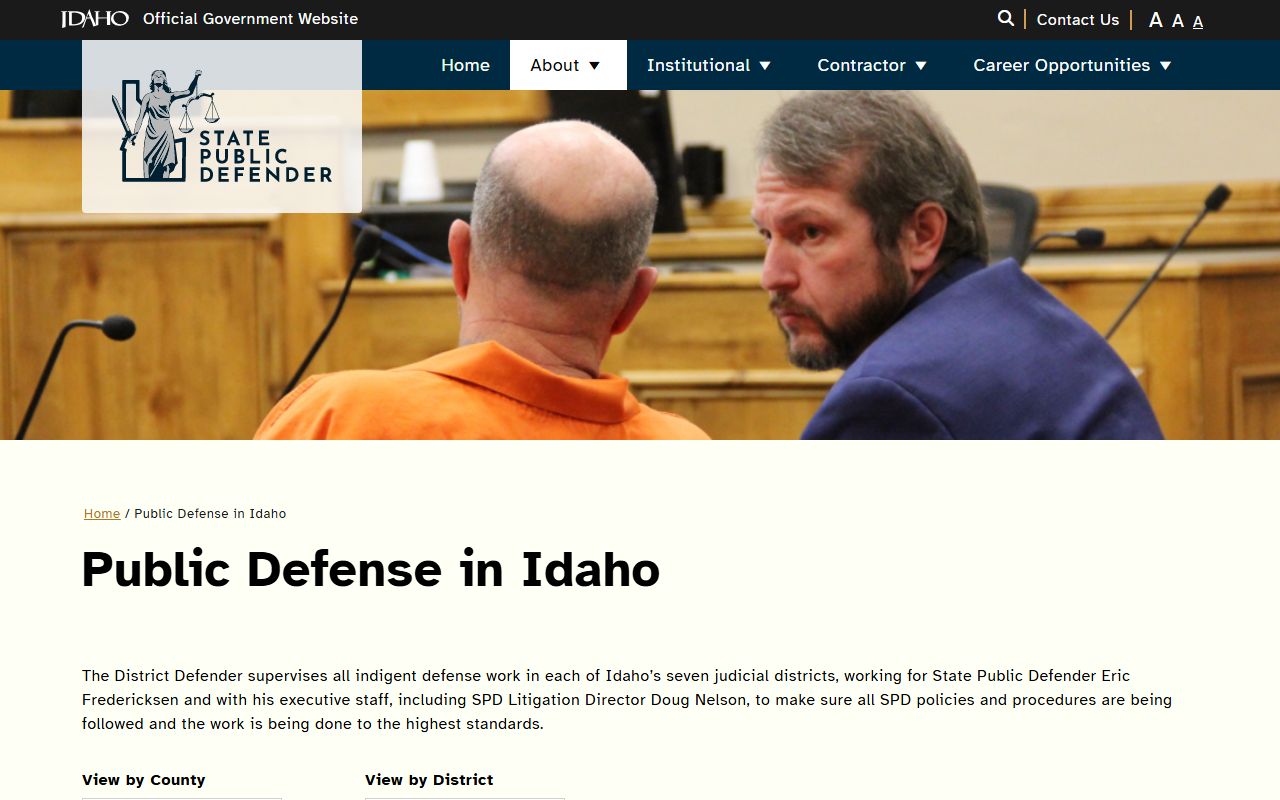
The manifest image from Idaho State Public Defender public defender offices shows the statewide appointed-counsel context for Lemhi County criminal cases.
Sealed vs. Expunged Records
Idaho access limits are more precise than a simple public-or-private label. Some criminal records may be sealed by court order, some juvenile records may be expunged under juvenile authority, and some criminal-history or fingerprint information may be limited through Idaho State Police processes. A public iCourt search may show no result even when a case exists if the case or event is sealed or restricted.
| Sealed | Expunged or Set Aside | |
|---|---|---|
| Visibility | Hidden or limited in the public court view by rule or court order. | May limit public access or update criminal-history records depending on the statute and order. |
| Idaho authority | ICAR 32 and case-specific sealing orders. | Idaho Code Section 19-2604, Section 67-3004, or juvenile Section 20-525A depending on the situation. |
| Effect | Does not necessarily erase the case for courts, agencies, or authorized users. | Does not automatically erase all court history, jail data, news coverage, or agency records. |
| Lemhi filing path | Usually the court where the case was handled. | Start with the case number and consult counsel or the State Public Defender if eligible. |
The manifest image from Idaho State Public Defender institutional offices provides the district-level public defender context for Lemhi County.
Public Access to Criminal Court Records
For Lemhi County criminal cases, use iCourt first for public case information, then use the District Court Clerk for copies of filed documents. Idaho court records are governed by Idaho Court Administrative Rule 32. Non-court agency records, such as some sheriff or county administrative records, may use Idaho Public Records Act channels and the Lemhi County written request form.
Key authorities:
Idaho Court Administrative Rule 32 governs access to Idaho judicial-department court records.
Idaho Code Section 74-103 provides public-record response timing concepts for agency records outside the court-file context.
Juvenile records, sealed records, victim-sensitive information, mental-health material, protected addresses, and private identifiers are not automatically public. If a criminal case search seems incomplete, the missing entry may be restricted, sealed, corrected, or only available through an authorized access channel.
Background Check Considerations
A public criminal court lookup is not the same as a regulated employment, tenant, credit, insurance, or licensing background check. Court records may be incomplete, may not include out-of-county or federal cases, may omit sealed entries, and may show charges that did not become convictions. For custody status, use inmate and jail records, Idaho VINE, or the sheriff. For active warrant concerns, use the warrant records page and contact the proper agency safely.
Important: Information from a casual court search should not be used for FCRA-regulated decisions.
The manifest image from the Idaho State Police county registry search shows a county-based registry tool that is separate from a full criminal court record.
Restricted Criminal Court Records in Lemhi County
Restricted criminal court records include juvenile proceedings, sealed case events, expunged juvenile material, private identifiers, victim-sensitive information, protected addresses, mental-health details, and records withheld by order or rule. The iCourt portal specifically warns that sealed cases and ICAR 32-exempt information do not appear in public results. The proper response to a missing or limited case is to verify with the District Court Clerk, not to assume the case never existed.