
Lemhi District Court Overview
Lemhi County belongs to Idaho's Seventh Judicial District. The district also includes Bingham, Bonneville, Butte, Clark, Custer, Fremont, Jefferson, Madison, and Teton counties. Idaho District Courts handle felony criminal cases, civil actions above magistrate assignment thresholds, appeals from the Magistrate Division, and judicial review of some government decisions. The Magistrate Division handles many daily local matters, including traffic and infraction cases, misdemeanors, preliminary felony hearings, small claims, landlord-tenant cases, probate, guardianships, conservatorships, juvenile matters, divorce, custody, and other family-law cases.
Lemhi County's structure is compact. A reader should not expect a separate county court, justice-of-the-peace court, or standalone probate court for local trial work. Court case records route through iCourt for public case information and through the District Court Clerk for copies of court-file documents. Law enforcement and prosecutor records may feed a case, but they are not the court file itself once charges, citations, or petitions are filed.
The same courthouse campus also concentrates many justice functions. Research places the District Court and Magistrate Court records counter, clerk, sheriff, jail/dispatch, and probation around Courthouse Drive, with the prosecutor nearby on Fulton Street. That layout can simplify in-person routing, but it also makes it important to ask for the correct counter. A sheriff report, prosecutor charging decision, court docket entry, probation record, and clerk-certified judgment are different records even when they arise from the same incident.
The official Lemhi County District Court Clerk page states that the clerk keeps District and Magistrate Court records.
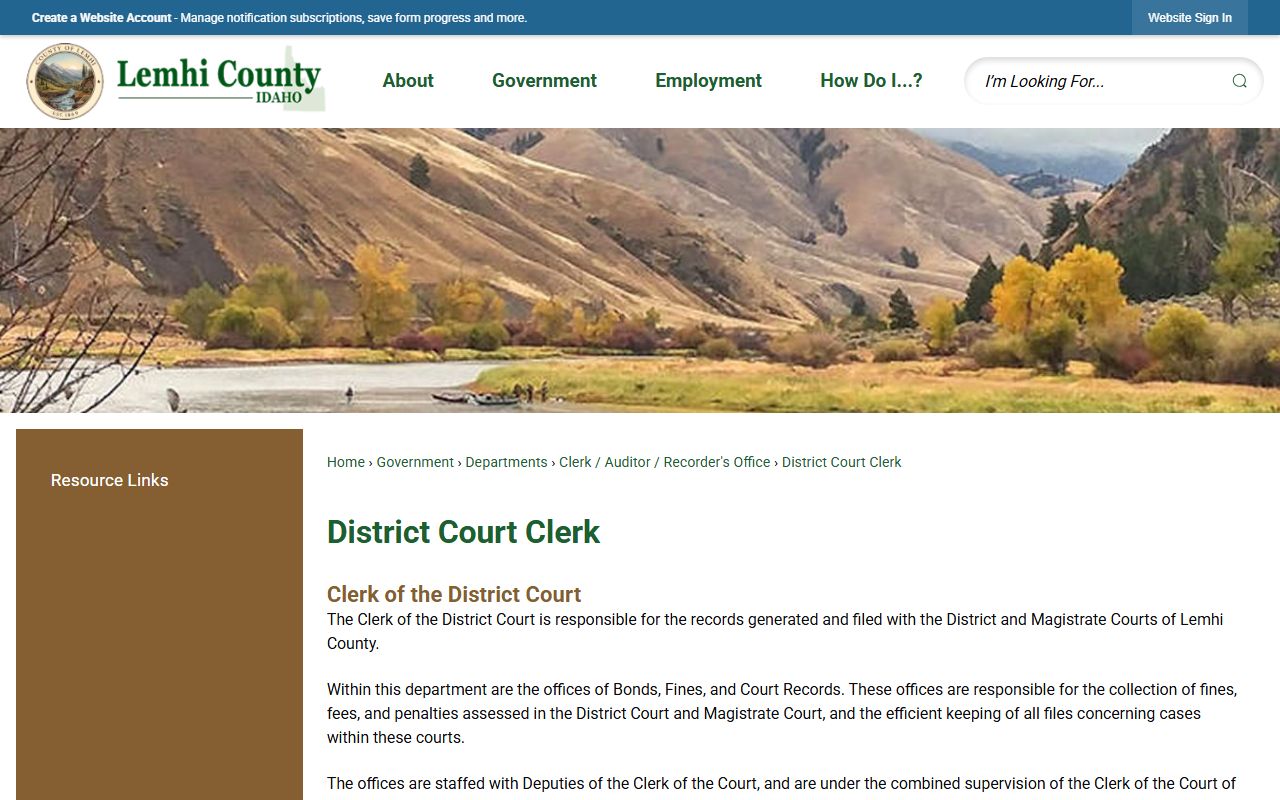
That local clerk function is why District Court and Magistrate Division records share the same practical counter channel in Salmon.
Lemhi County Court Table
Lemhi County does not have numbered district courts in the way some states do. The local table below uses the official court and justice-system offices identified in the research, with the District and Magistrate Court serving as the trial-court venue and related offices listed for routing context.
| Court / Office | Type | Address | Phone |
|---|---|---|---|
| Lemhi County Court / District and Magistrate Court | Trial court venue | 206 Courthouse Drive, Salmon, ID 83467 | (208) 742-1673 |
| Lemhi County District Court Clerk | Court records, bonds, fines, penalties | 206 Courthouse Drive, Salmon, ID 83467 | (208) 742-1673 |
| Lemhi County Clerk/Auditor/Recorder | County clerk, recorder, elections, board clerk, auditor | 206 Courthouse Drive, Salmon, ID 83467 | (208) 742-1665 |
| Lemhi County Prosecutor | Charging and prosecution office | 200 Fulton Street, Suite 104, Salmon, ID 83467 | (208) 742-1276 |
| Lemhi County Probation | Probation contact | 205 Courthouse Drive, Salmon, ID 83467 | (208) 742-1720 |
| Salmon Police Department | Local law enforcement, reports directed to sheriff dispatch/jail basement | 200 Main Street, Salmon, ID 83467 | Dispatch (208) 756-8980 |
The court page lists the court phone and fax and identifies court staff roles. The clerk page identifies court records, bonds, fines, and assessed penalties as District Court Clerk functions. The prosecutor and sheriff are included in the table because criminal cases often begin with reports, arrests, affidavits, or charging decisions from those offices, then become court records after filing. For filed case records, the court clerk and iCourt remain the court-record channels.
District vs Magistrate Court
Idaho's local trial-court split is District Court and the Magistrate Division of the District Court. The research did not identify a Lemhi County court at law, county court, or justice court for filed cases. Municipal law-enforcement agencies may issue citations or reports, but filed court cases route through the state trial courts unless assigned otherwise.
| Topic | District Court | Magistrate Division | Law Enforcement / City Citation Source |
|---|---|---|---|
| Main role | Felony trials, higher civil cases, appeals from magistrate, judicial review. | Traffic, infractions, misdemeanors, small claims, landlord-tenant, probate, family, juvenile, felony preliminaries. | Arrests, citations, reports, affidavits, and referrals that may become court cases. |
| Record channel | iCourt plus Lemhi District Court Clerk. | iCourt plus Lemhi District Court Clerk. | Sheriff, Salmon Police, or prosecutor records before filing; iCourt after filing. |
| Probate | Not a separate probate court. | Probate, guardianship, and conservatorship venue. | No probate jurisdiction. |
| Appeal path | Further appeal may go to Idaho Court of Appeals or Idaho Supreme Court. | Some magistrate matters can be appealed to a district judge. | No appellate role. |
The Idaho court structure page is assigned to this district page.
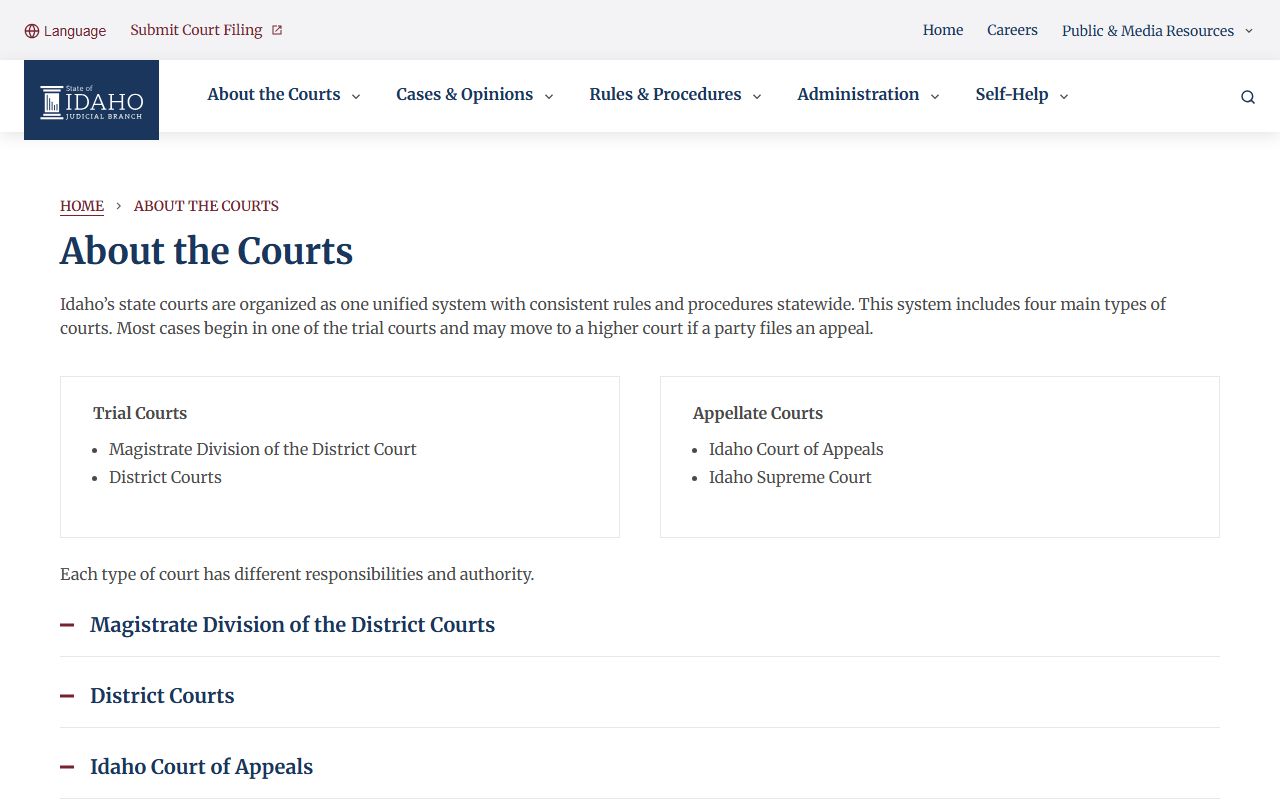
Statewide structure explains why one local courthouse can include several case types without separate local court names.
Lemhi District Case Flow
A Lemhi County case may start with a citation, arrest, complaint, petition, or application. The first filed case information may appear in iCourt if public, but documents such as pleadings, orders, judgments, and certified copies still require the clerk, kiosk, or approved access route. Felony matters usually begin with magistrate proceedings before moving to District Court if the case proceeds past the preliminary stage.
Criminal flow: Arrest or citation › Magistrate first appearance › bond or release decision › preliminary hearing where required › bindover or filing in District Court › arraignment › motions › plea or trial › sentence › appeal.
Civil flow: Complaint or petition filed › service › answer or default › motions › hearing or trial › judgment or order › post-judgment filings › appeal if allowed.
Probate flow: Petition or application › appointment request › letters or order if approved › notices and inventory › accounting or distribution › closing order or discharge.
Traffic and misdemeanor cases follow a shorter route in many instances. A citation or complaint may be filed in the Magistrate Division, followed by an appearance, admission or plea, payment, trial setting, default, disposition, or payment-plan activity. A felony case often has more stages because the magistrate handles the first appearance, bail, and preliminary hearing before the matter proceeds to District Court for felony arraignment, trial, plea, sentencing, and appeal steps.
Lemhi Court Staff
The county court page lists local court contacts and staff. Research identifies Jana Eagle for District Court, Magistrate Court, and Small Claims Court. The official court page also lists a District Court Clerk, deputy clerk, magistrate judge, and district judge, and the staff directory includes court clerk, magistrate judge, district judge, and deputy clerk entries. Court staff can provide record routing and payment information, but they cannot give legal advice.
Case type controls the judge or division more than the building name does. Magistrate judges commonly handle misdemeanor, traffic, family, probate, guardianship, conservatorship, small-claims, landlord-tenant, and felony preliminary matters. District judges handle felony trials and sentencing, higher civil actions, appeals from Magistrate Division, and judicial review. A docket search may show a judicial officer, hearing type, courtroom, and location, but a copy of the filed document still routes through the clerk.
The Idaho Rules for Electronic Filing and Service identify the electronic filing framework and official court record concepts.
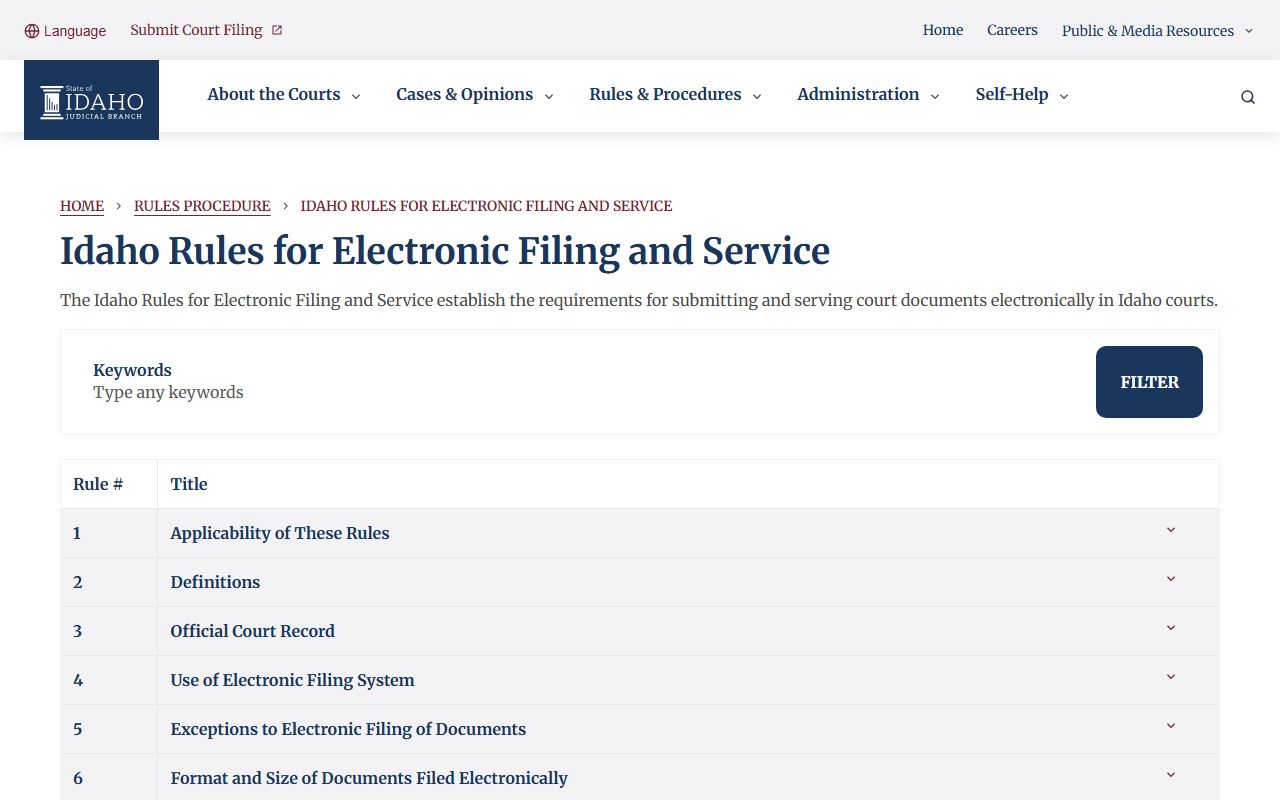
E-filing rules matter when a party is filing a court document, while public viewers usually begin with iCourt or the clerk.
Lemhi Filing Tools
Lemhi County court users have several statewide tools. The Idaho iCourt Portal provides public case search, hearing search, and payment search. Idaho Guide and File supports some self-represented filing workflows. Idaho File and Serve is the e-filing portal. For copies of records from a case, Idaho's court guidance still points users to a county courthouse kiosk or a request to the clerk where the case was filed.
iCourt Smart Search can be used by record number or name, with advanced filters for location, search type, case type, status, filing date, judicial officer, and protection-order fields where available. Search Hearings can be narrowed by location, hearing type, case number, party name, business name, attorney, judicial officer, or courtroom. Payment search can use citation number, case number, party name, business name, or driver's license when the needed data is present. Sealed cases and ICAR 32-exempt information should not be expected in public portal results.
The Idaho Guide and File screenshot is assigned to this district court page.
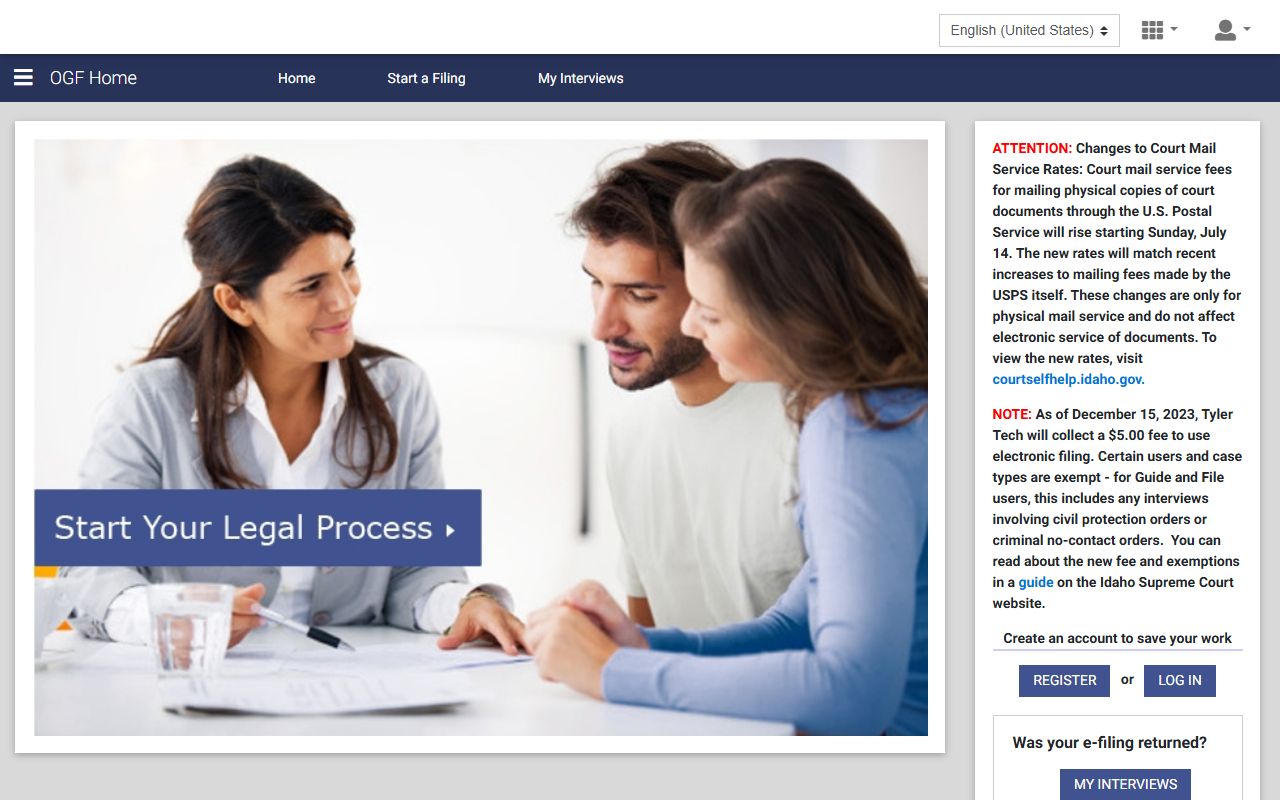
Guide and File helps with preparing some filings, but it is not a substitute for searching existing court records or requesting certified copies.
The Idaho File and Serve portal is also assigned to the district page.
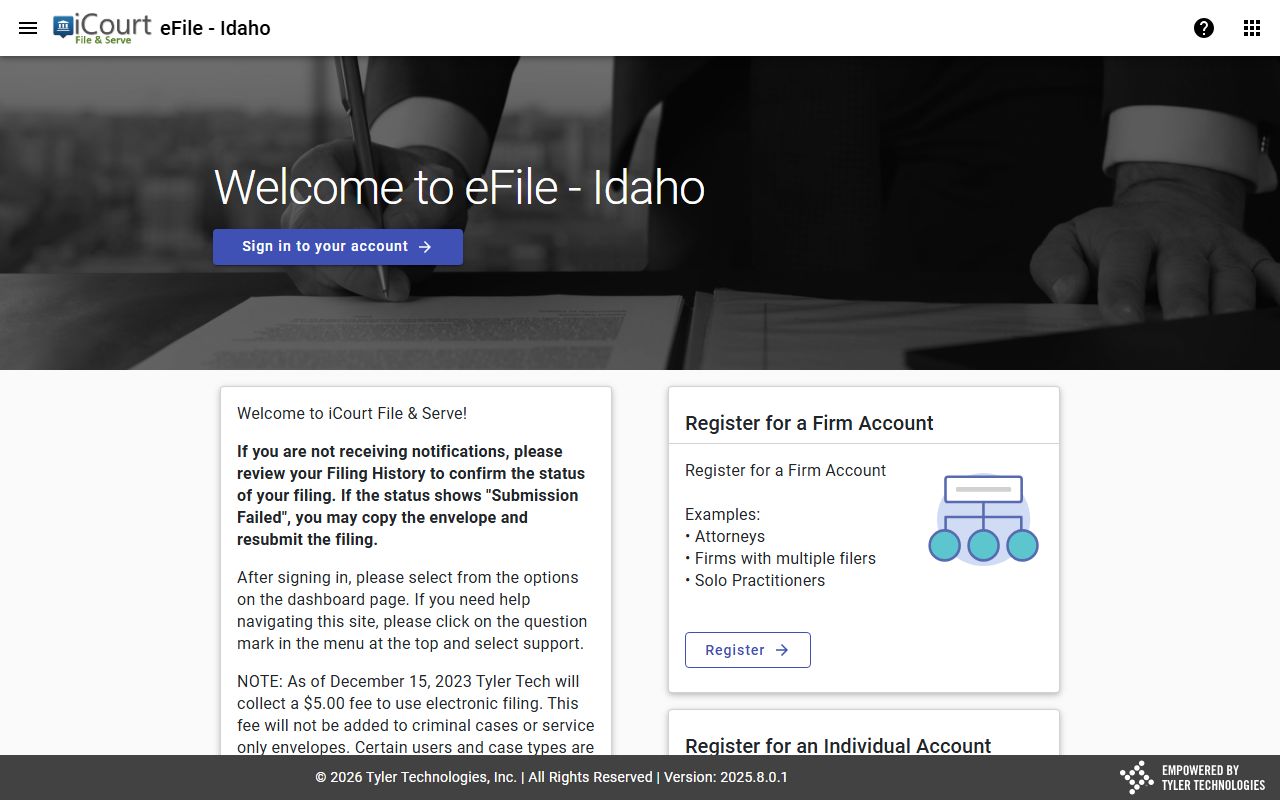
Filed documents become part of the official court record according to Idaho's court rules and clerk processes.
Appeals and Federal Split
Appeals from magistrate matters can be heard by a district judge, and further state appeals may route into the Idaho Court of Appeals or Idaho Supreme Court. Federal cases are different. Lemhi County is assigned to the Eastern Division of the U.S. District Court for the District of Idaho for federal venue purposes, and federal case information is searched through PACER or District of Idaho systems, not Lemhi County iCourt.
Federal criminal prosecutions, federal civil rights cases, diversity civil cases, federal habeas matters, federal agency review, Social Security appeals, and bankruptcy-related matters are outside the Lemhi County state court file. A state appeal is also not the same as a new trial; appellate courts review the trial-court record under appellate rules. When the case has moved out of the county trial court, the record path follows the appellate or federal court that now controls the file.
The U.S. District Court for the District of Idaho county division page is assigned to this Lemhi District Court page.
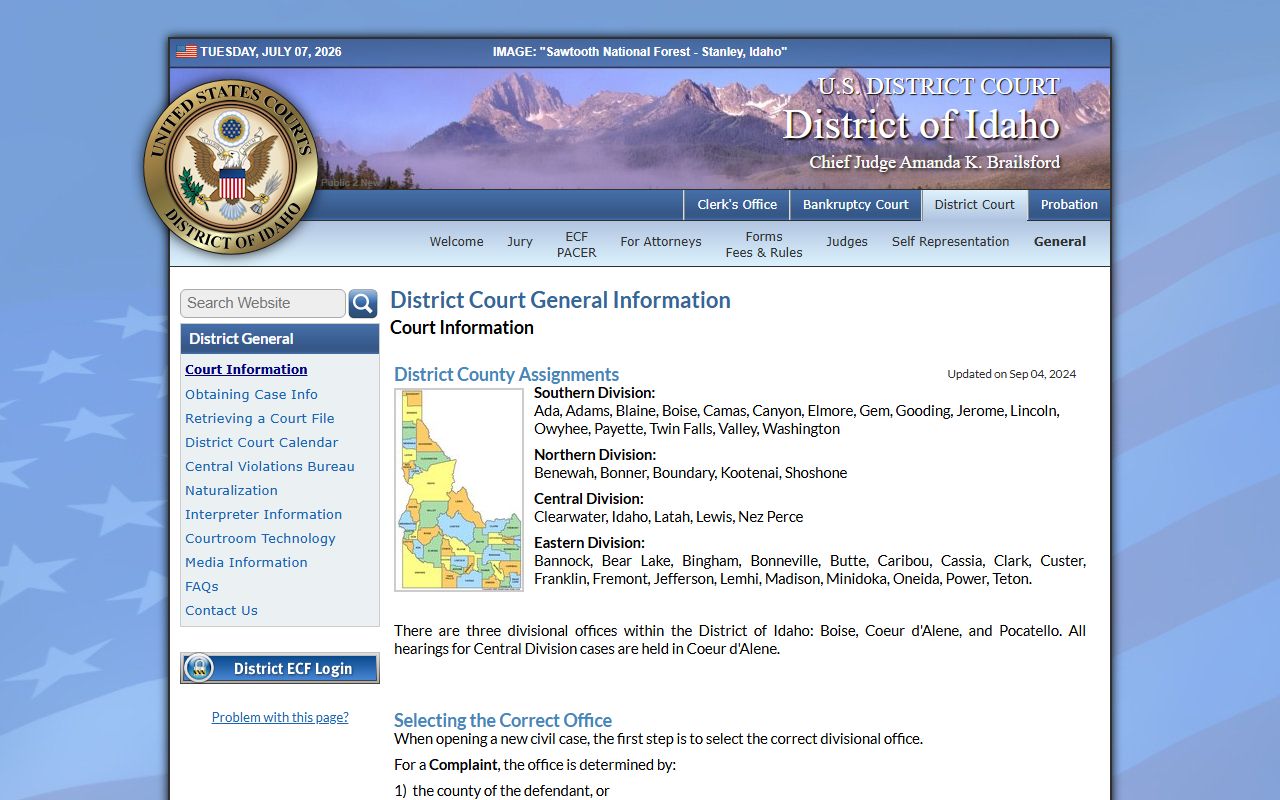
That federal division assignment helps prevent a common error: searching state court tools for a federal prosecution, federal civil case, or bankruptcy-related matter.
Note: Lemhi County trial-court records are state records unless the case was filed in a separate federal court.